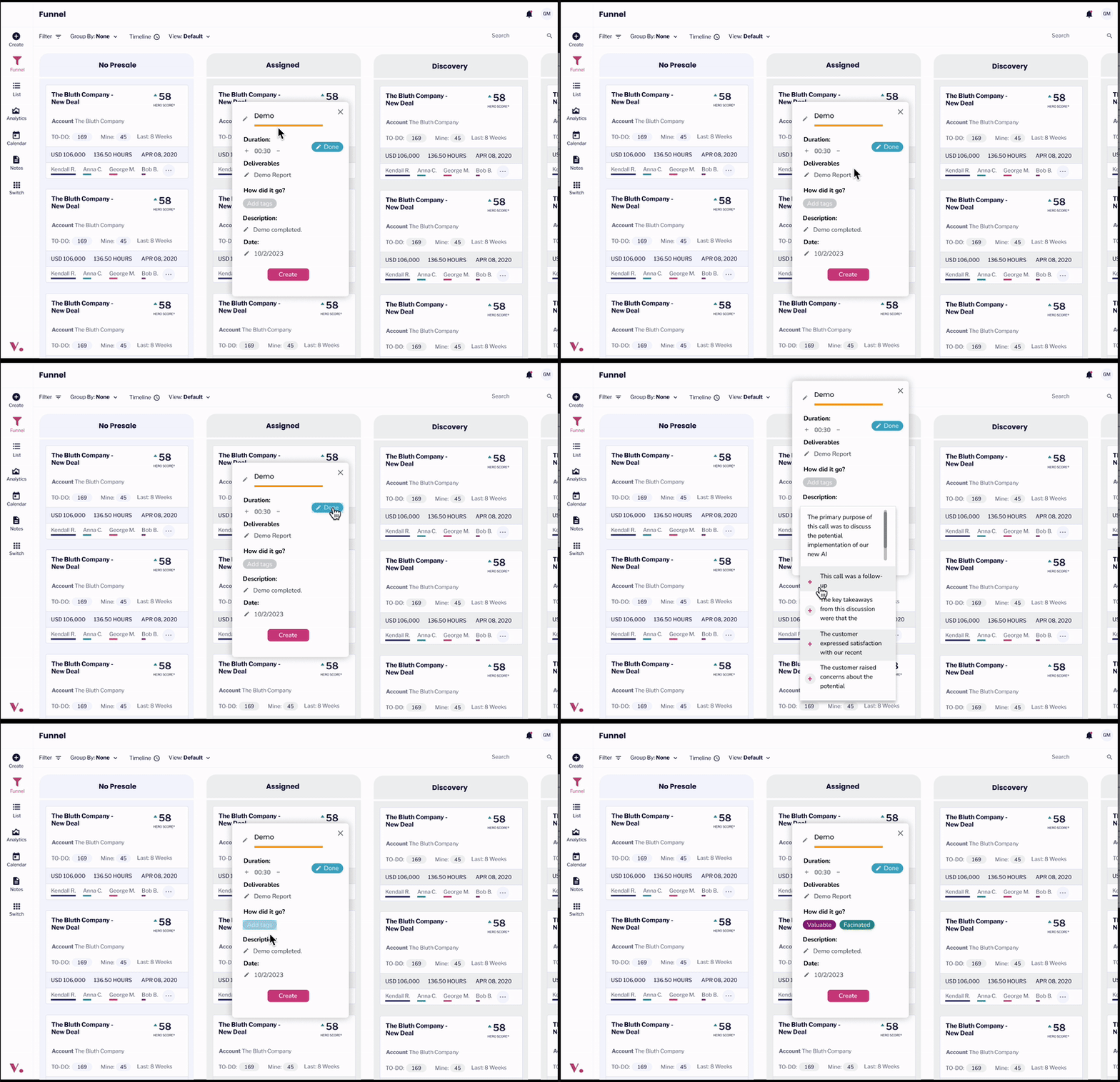
A score is only as useful as its inputs.
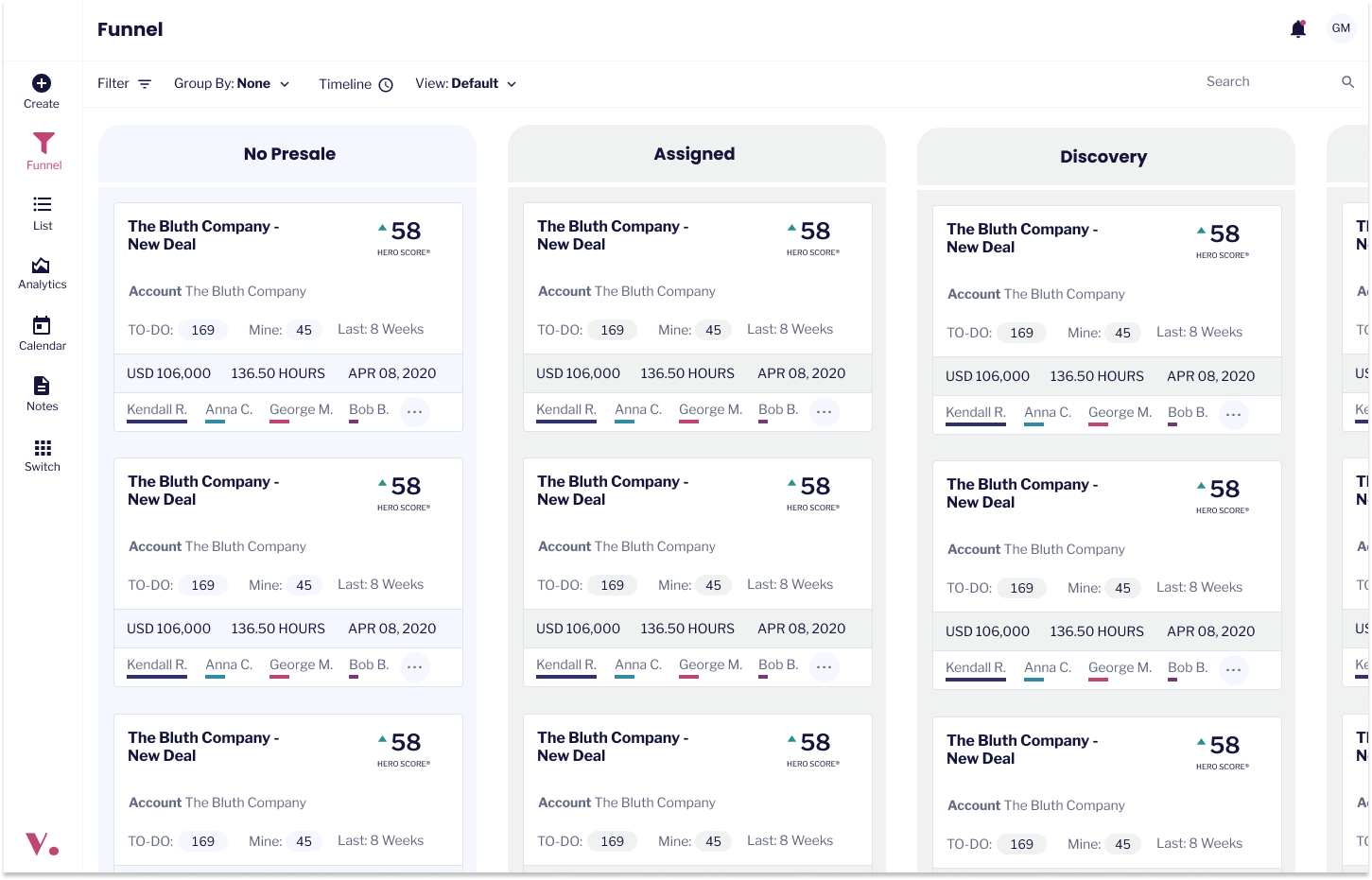
Vivun helps sales engineers track deals through a pipeline. Its Hero Score uses logged activity to indicate how an opportunity is progressing. But calls, emails, texts, and internal meetings all needed to be entered and linked to an account and deal.
Weekly customer conversations exposed the problem: logging felt like extra administrative work, so it often went undone. The missing data weakened the score’s usefulness.
Design for the busy reality of the user.
My design work focused on the activity-entry experience, collaborating with product management, frontend and backend engineering, data science, and stakeholders. Conversations with team leaders helped connect the logging problem to their need for better feedback on deal progress.
We defined two signs of success: more activities recorded each month, and customers describing the task as less of a chore. These were evaluation goals, rather than a claim of measured improvement.
Make exploration easy to participate in.
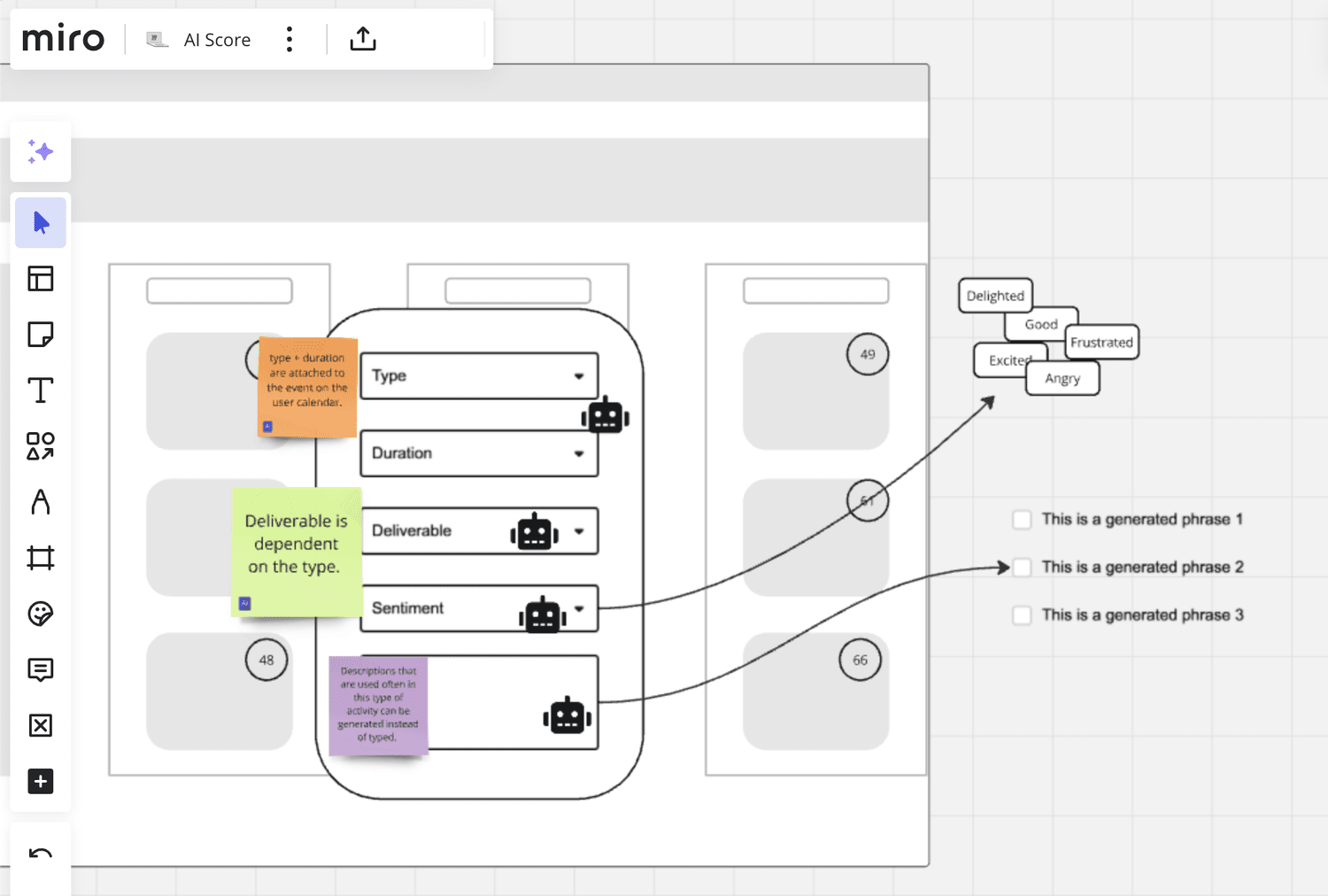
I used Miro and low-fidelity wireframing to bring internal sales engineers into the design process. The low barrier to participation helped the team explore different interfaces without committing too early.
A component-based design system made it easier to assemble and test alternatives in Figma. The goal was to compare interactions quickly, learn from feedback, and refine the experience.
Help people describe what happened.
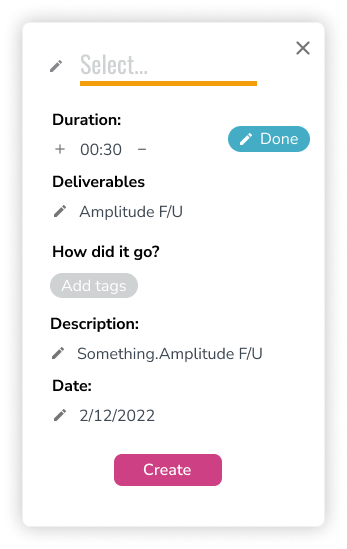
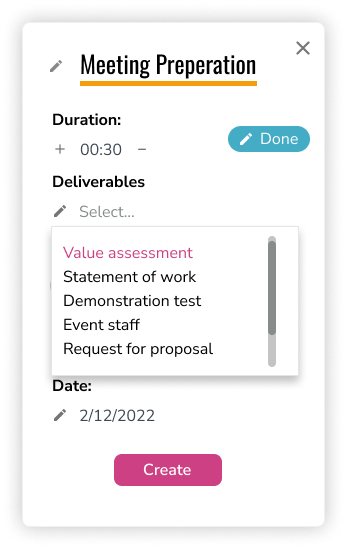
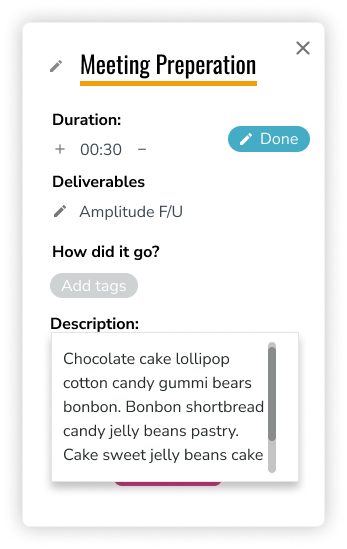
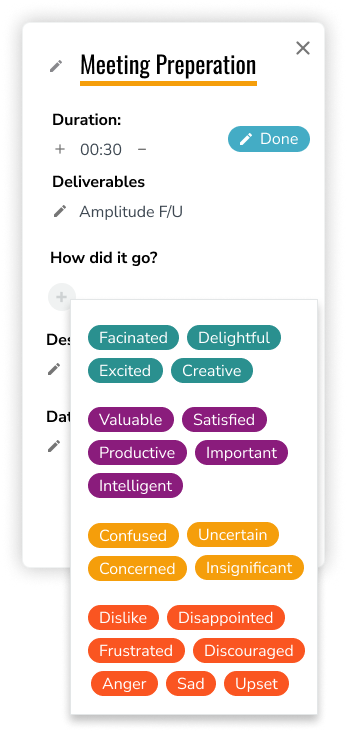
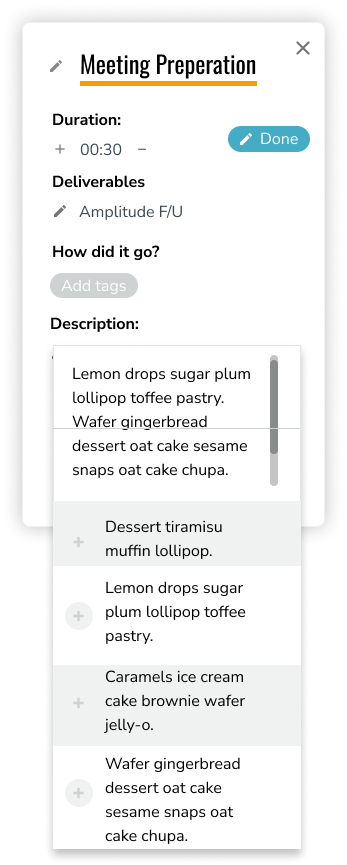
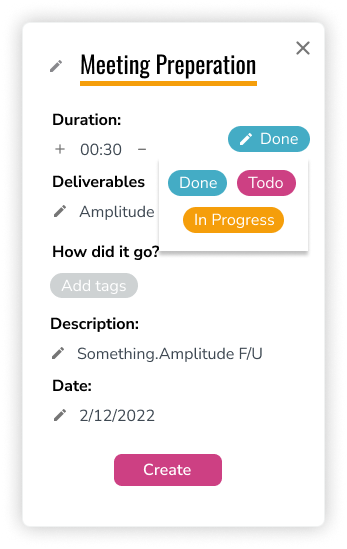
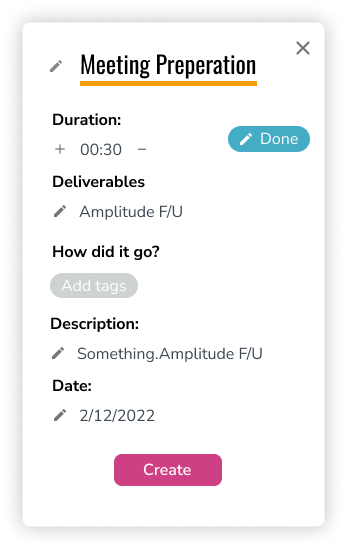
The proposed solution used AI to suggest activity descriptions and help identify activity types and sentiment. Selecting a relevant description reduces the effort of starting from a blank field; sentiment gives team leaders another signal when a deal is not progressing well.
Taking the interface one step further.
A hackathon prototype explored Ava, a voice assistant for recording activity from a smartwatch or mobile device. Instead of navigating fields, a sales engineer could describe the activity aloud. Sales engineers responded positively to the concept.
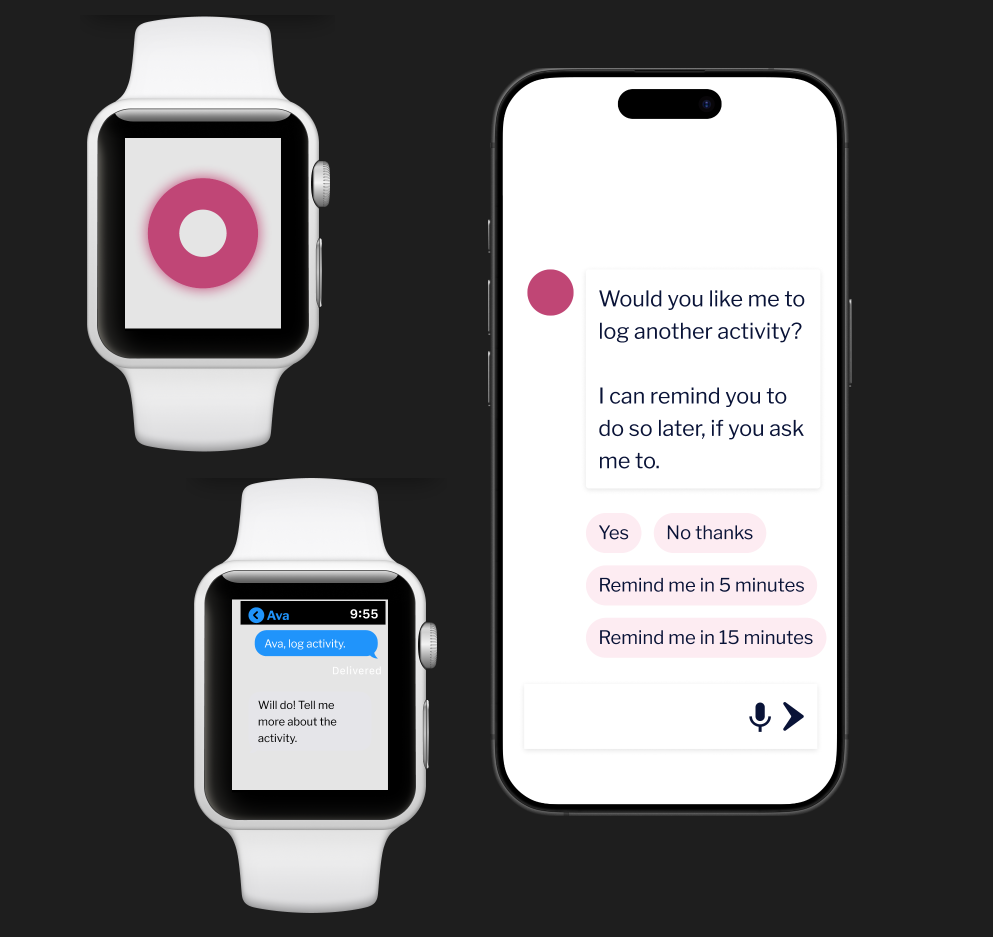
This was a concept exploration, separate from the primary interface proposal. Across both, the design principle stayed consistent: make contributing useful data fit naturally into the user’s day.